The production method
If what you actually need is a whole production rather than a performance, the room is the smaller half of the answer. Arrangement Based Automation is the other half.

The room, and what is actually running in it. One of the doors into ABA Media Platform — a one-person media studio in Greeley, Colorado.
Somewhere on that page was a 1073 and a pair of Avalons. What arrived was competent, thin in the same places your mix was already thin, and unmistakably a plugin.
You could not check before you paid, and you could not prove it afterward. So you did what everyone does — you kept the file, worked around it, and did not book that seller again.
The list was probably not even a lie. Studios do own the boxes they photograph. Owning is not running. A rack is not a signal path, an amp with a bad tube is still on the inventory, and half the pedalboards on the internet have not been wired in two years.
A gear list is an assertion. This page is the executed version.
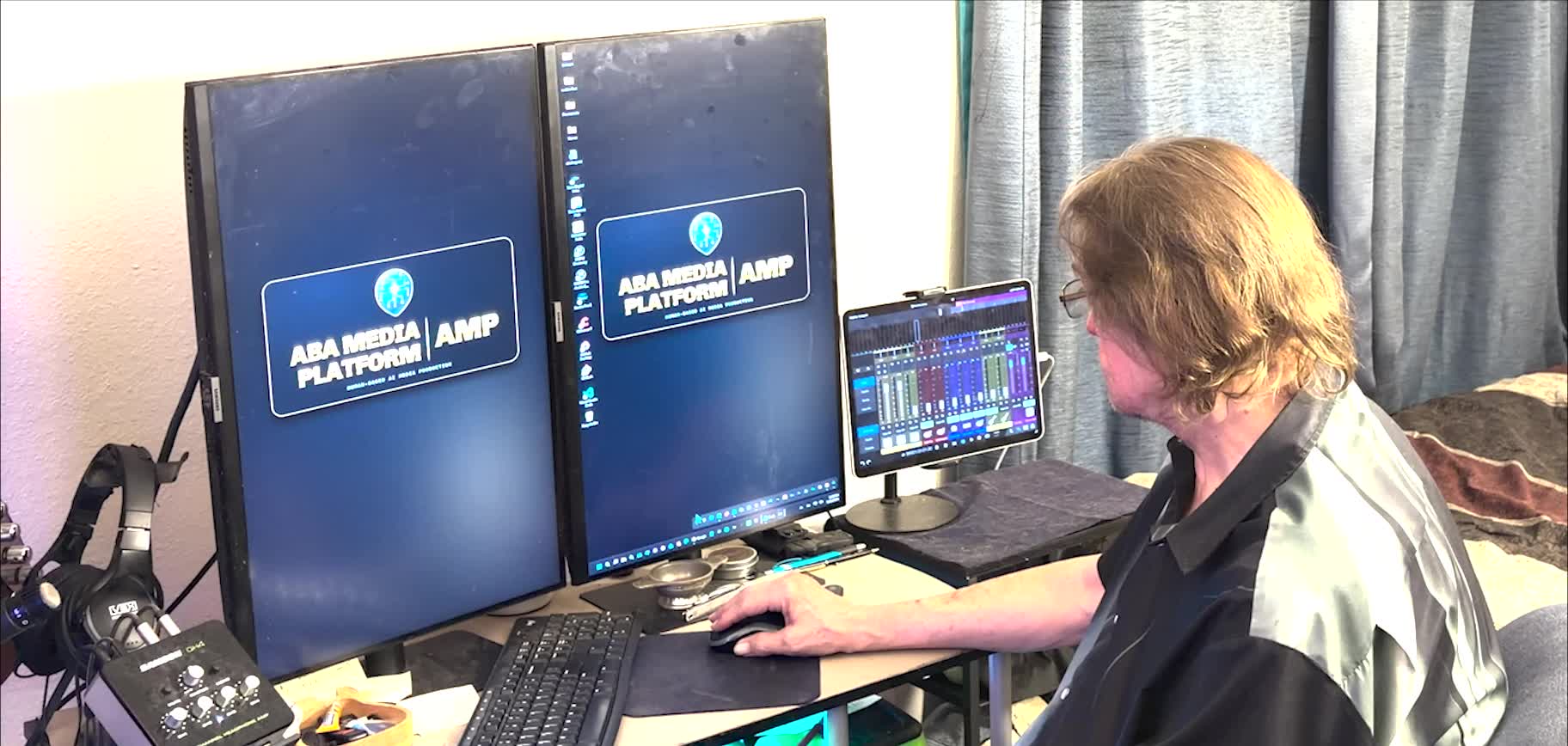
The room, September 2026 — a frame from the studio reference recording. It is published as it was. Nothing in it has been tidied, moved, relit or retouched for the picture, which is the least a page arguing this particular case can do.
The claim, and how to break it
Not stored. Not “available on request.” Powered, patched, in the signal path, and used. The pedals are wired. The amps have current tubes. The 500 series is racked into a converter that feeds the templates, not sitting in a box behind the desk.
Which is easy to type, so here is the way to test it. Pick any line on this page — the ’82 Jim Kelley, the D’Angelico, the Mike-E, whichever one you think is decoration — and it gets recorded playing, on the pre-production call, before anything is booked.
That is the whole offer. A studio that cannot do that on request is telling you something, and a studio that can has just made its gear list checkable, which no gear list has ever been.
The Fender Twin’s amplifier section does not work. It blows a mains fuse on power-up and has resisted three repair attempts. What is in use is its cabinet and its two Celestion 75 Creambacks, driven by the Bugera head — a real rig, a good-sounding one, and not a Twin. So it is not described as one.
It is on this page because the claim above is worth exactly what its exceptions are worth, and an exception you find after booking costs more than one printed before it. A gear list with no faults in it is a gear list whose faults you have not met yet.
Why the list is short
The other forty-six were not sold off because they were bad. They went because a rig with fifty-four decisions in it is a rig where every take starts with a decision, and the take is not the place for that.
Everything in this room has been through that same cut. What is left is not the biggest room that could be assembled for the money — it is the smallest one that can still do the work without an apology. The value is in what was removed, which is also the argument the production method makes, in the same building, about the same problem.
The signal path
Avatone CLA-10s on a CLA-200, Yamaha HS5s and a sub, switched from a PreSonus Control Station. Five translation stations, including Event 2020 Biamps in the drum room, because a stem that only works on the mains is a stem that will not survive your mix.
The room is acoustically treated, has movable gobos where isolation is needed, and is tuned with a dedicated third-octave room EQ for the CLA-10s across 36 measured sample points. Calibration is done here, not assumed: dual-trace oscilloscope, dual-channel tone generator, capacitor tester.
The drum room
A Roland TD-27 with a double kick and the upgraded snare and hi-hat. Kick and snare come out on their own channels and the rest of the kit on a stereo pair, and every hit is recorded as MIDI at the same time: its touch, its timing and the pedal position, kept as data rather than flattened into audio.
The drummer picks the sound. The module holds 75 preset kits, and the one chosen for the take is recorded with the performance. That choice is the player’s, and it is credited as the player’s.
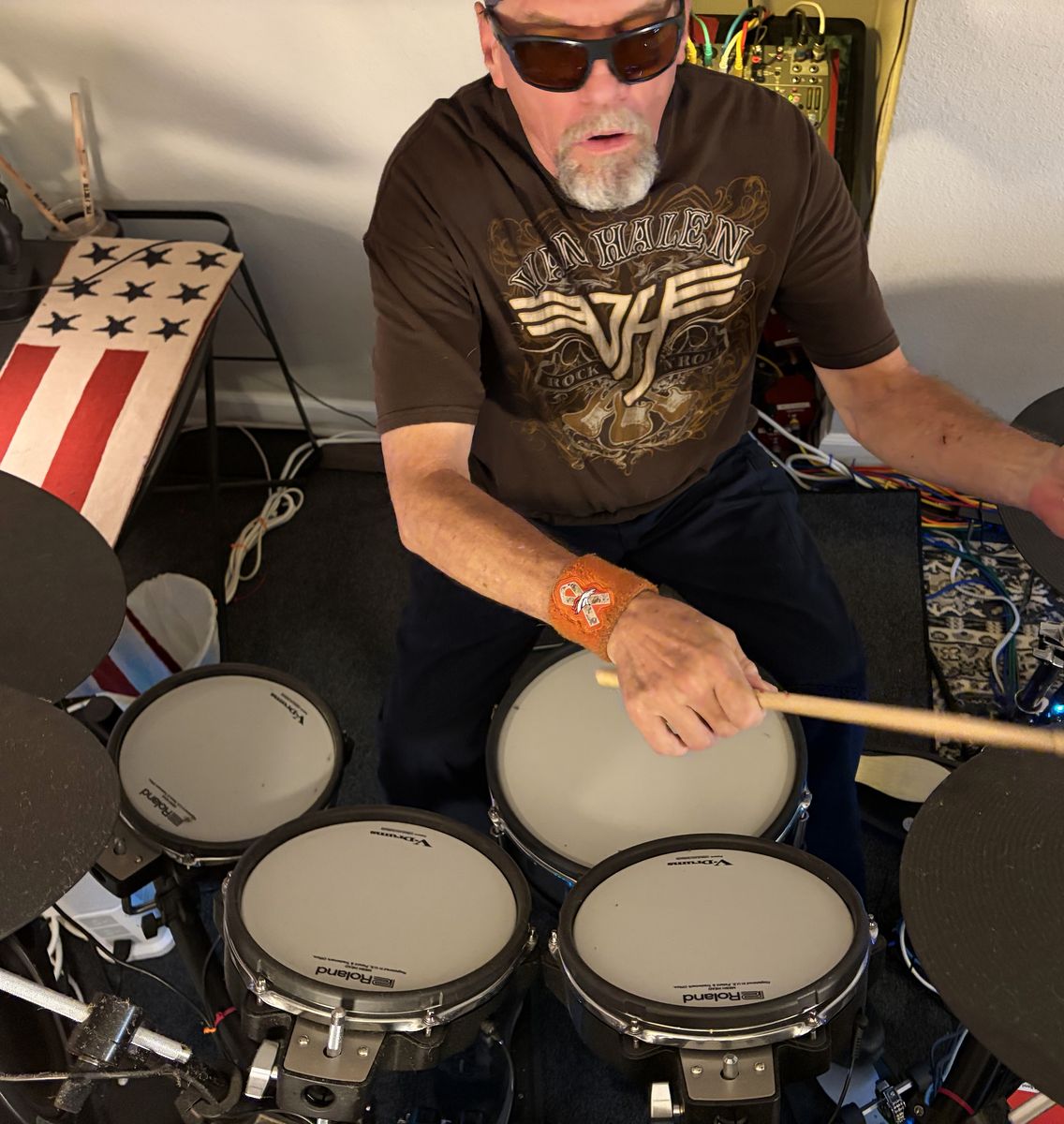
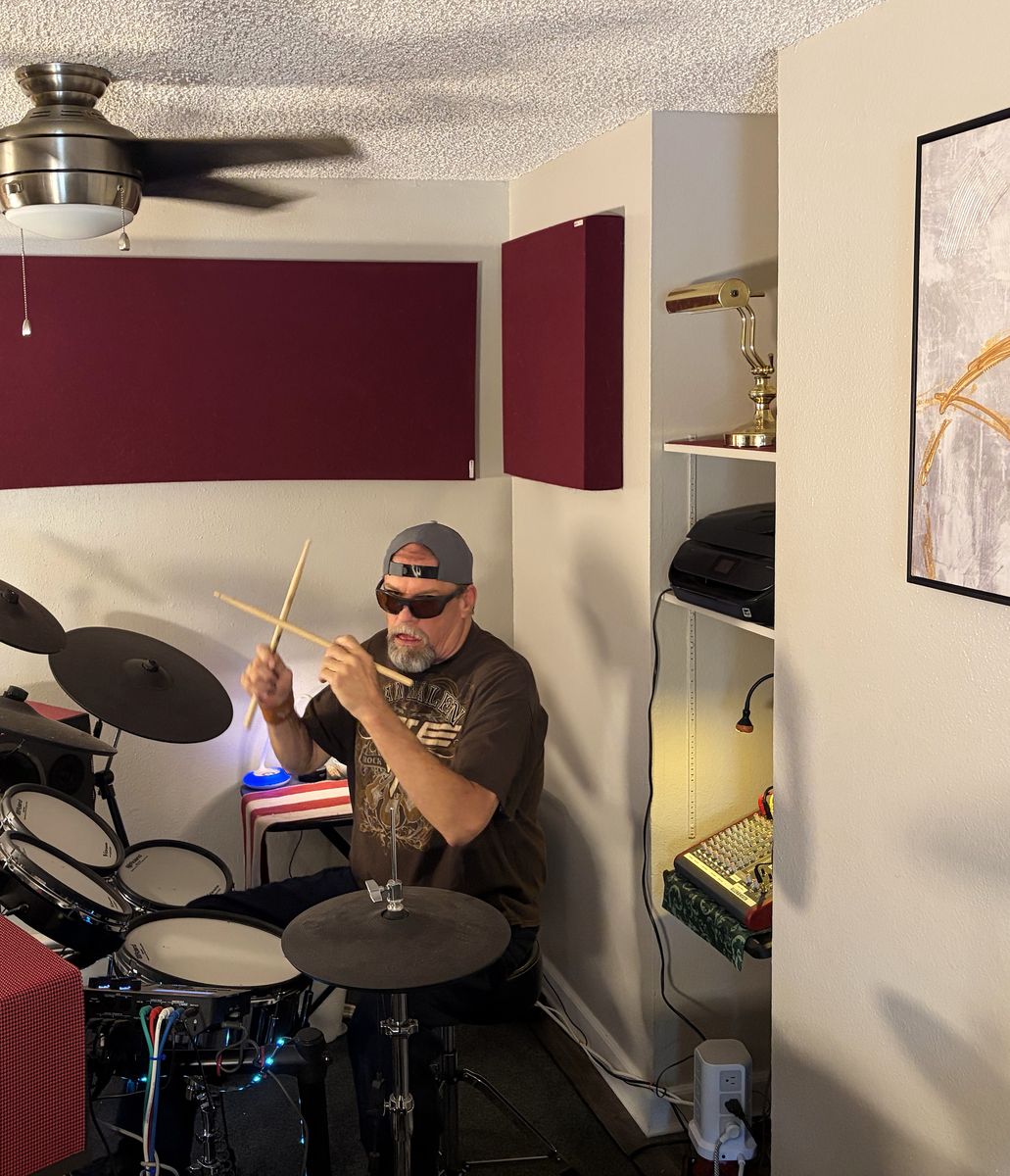
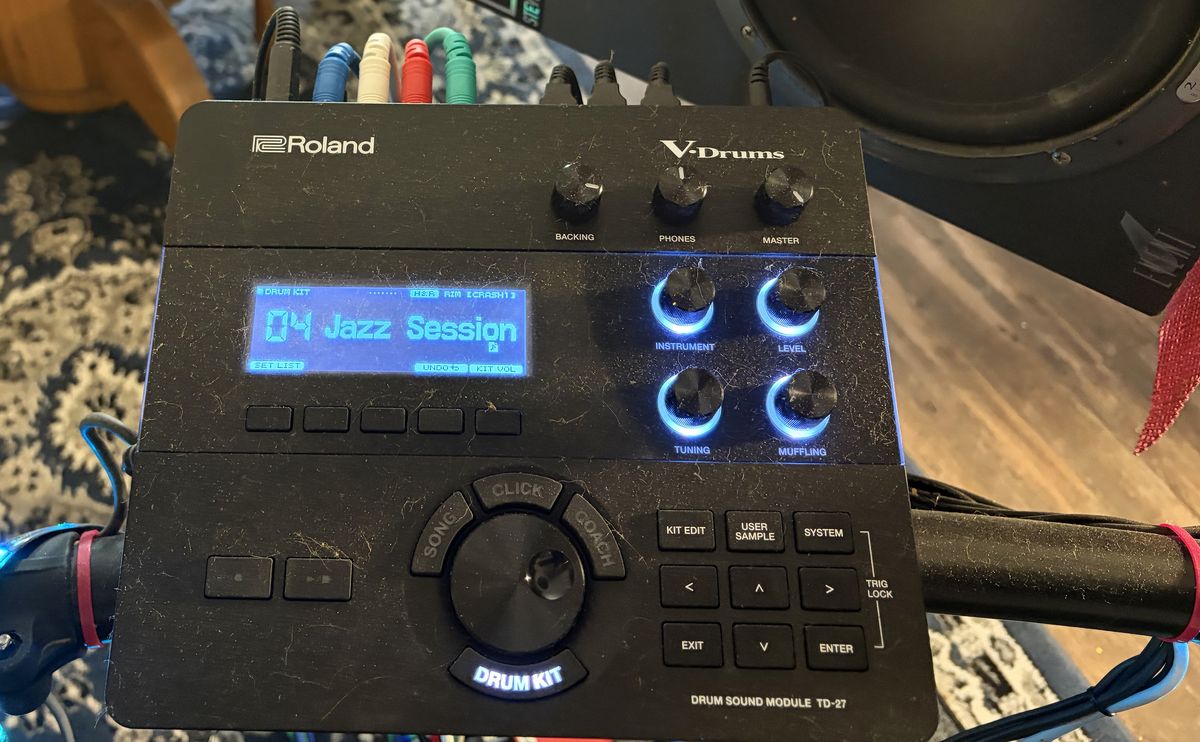
The drum room, 25 September 2026.
What you send
The usual first email from a studio asks you to bounce every part to audio, start each file at zero and include a tempo map — because the room at the other end cannot open what you work in.
That request costs you a day, and then it costs you your revisions. Once a part is flat, nothing inside it can be changed without going back to your own session and doing the work twice.
Pro Tools, Reaper and Studio One sessions open here as you built them. Your plugins resolve rather than coming up as missing-plugin placeholders, so nothing is quietly lost between your room and this one, and the first thing asked of you is not the one thing you cannot undo.
That is what the licensed plugin library is for. It runs past seven thousand, and the reason is unglamorous: every host that has to be supported needs its own installed copy. It is a compatibility bill, not a collection.
What arrives
48 kHz, 24-bit WAV. Every stem starts at 00:00:00 — measure 01.01.00 — whether or not the part enters there.
Which sounds like housekeeping until the alternative has cost you an afternoon: eight files with eight different head trims, lined up by ear against a click you cannot see, and a doubt about the guitar entry that stays with you until the mix is finished. Consolidated stems are not a courtesy. They are the difference between importing a performance and reconstructing one.
How sessions run
Pre-production, revisions and delivery all happen on video calls. The room is a working control room built around one operator and a desk — it is not laid out for a client sofa, and pretending otherwise would make for a worse session, not a warmer one.
In-person work in Greeley is possible by arrangement and is genuinely the exception. It is worth saying plainly rather than leaving it to be discovered after a booking.
Not claimed here
The number here is real and it is large. It is still not an achievement — it is what supporting several DAW formats costs, which is a bill rather than a boast. Printed as a headline it invites a doubt it does not deserve, and there is nothing a reader can do with it.
A rating a studio awards itself is not evidence. The gear is listed by name so you can price it, doubt it, and ask to hear it.
Thirty years of this work was done for shops that sold their clients anonymity, so a good deal of it was never credited and never will be. Uncredited work is described as uncredited. It is not converted into a name-drop because a name-drop cannot be checked either.
The automated conductor pass is real and it is measured. The specific channel and VCA counts behind it are not published until they have been captured from the desk with a test log, because a number stated from memory is the kind of confident approximation this company does not ship.
If the stem is not the whole problem
If what you actually need is a whole production rather than a performance, the room is the smaller half of the answer. Arrangement Based Automation is the other half.
AudioVibes measures a finished master against the target it was made for and names the difference. It runs in the browser, on the machine in front of you.
A day in a room is not what anyone is buying. The takes, the mixes, the master, the session that can be opened again — that is what the money bought, and it is what has to still be there later.
Including the one still open and the one that was withdrawn and left on the page where it used to be true.